
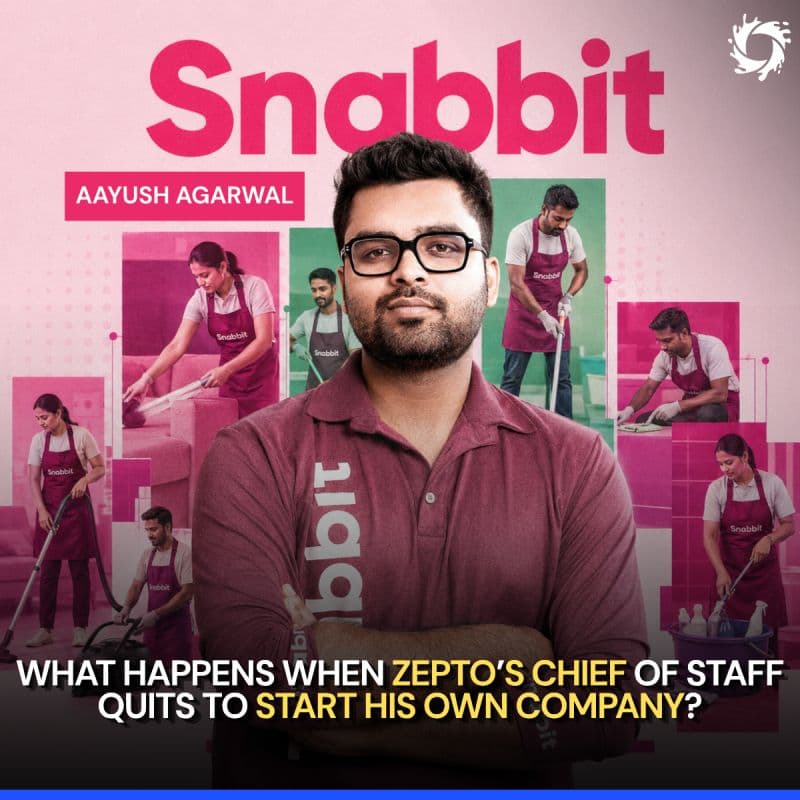
In 2024, Aayush Agarwal identified a market inefficiency: urban Indians can receive groceries in 10 minutes, yet booking reliable domestic help remains a fragmented, time-consuming process. Rather than build a traditional marketplace, he applied the quick-commerce model—standardized supply, hyper-local density, and speed—to human services.
Snabbit's execution mirrors the fast-moving inventory playbook. The platform operates exclusively in micro-markets dense enough to guarantee verified professionals arrive within 15 minutes. This geographic concentration, not marketplace breadth, is the structural advantage.
The company manages a standardized workforce of 15,000+ women professionals with the precision typically reserved for dark-store logistics. This supply-chain discipline—verified, trained, and responsive—replaces the coordination friction that plagues traditional home-services marketplaces.
-800x450.jpg&w=3840&q=75)
-800x450.jpg&w=3840&q=75)
-800x450.jpg&w=3840&q=75)
-800x450.jpg&w=3840&q=75)
-800x450.jpg&w=3840&q=75)
-800x450.jpg&w=3840&q=75)

-800x450.jpg&w=3840&q=75)