
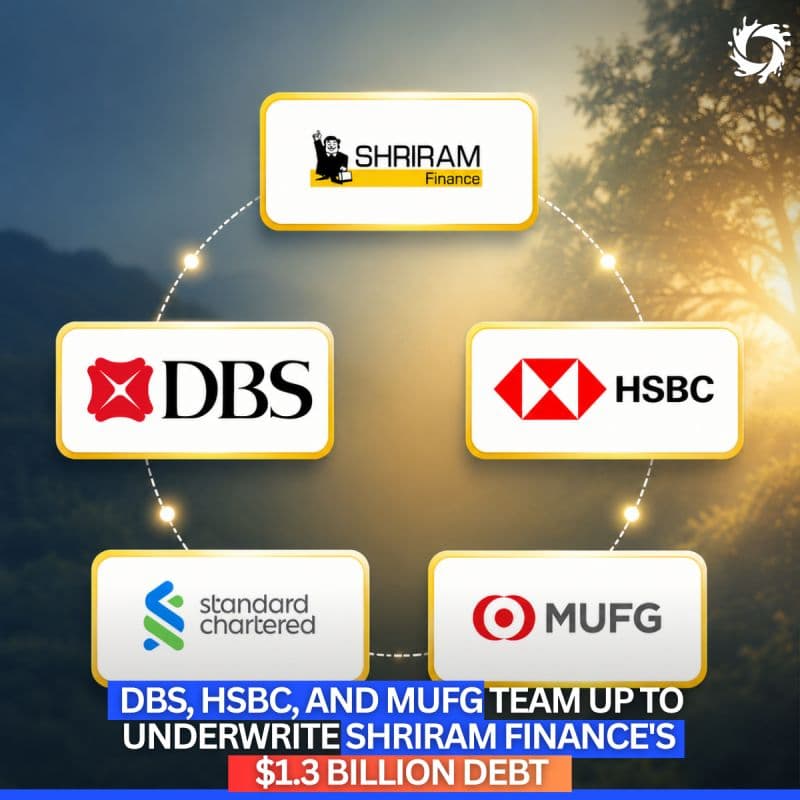
Shriram Finance has secured a $1.3 billion syndicated offshore loan from a consortium including DBS Bank, HSBC, Standard Chartered, and MUFG. The facility marks a shift in the NBFC's funding strategy, moving away from increasingly expensive domestic debt markets.
The upgrade to BBB- investment grade rating—partly enabled by a strategic partnership with Japan's MUFG Bank—has opened access to global liquidity pools. This threshold is the key: cross it, and international lenders compete on price.
Domestic funding for Indian NBFCs has become costlier. Interest rates remain elevated, rupee liquidity is constrained, and local banks are widening spreads. The math is straightforward: borrowing offshore, paying hedging costs, and still landing at a lower all-in cost of capital than available domestically.
-800x450.jpg&w=3840&q=75)
-800x450.jpg&w=3840&q=75)
-800x450.jpg&w=3840&q=75)
-800x450.jpg&w=3840&q=75)
-800x450.jpg&w=3840&q=75)
-800x450.jpg&w=3840&q=75)
-800x450.jpg&w=3840&q=75)
-800x450.jpg&w=3840&q=75)