
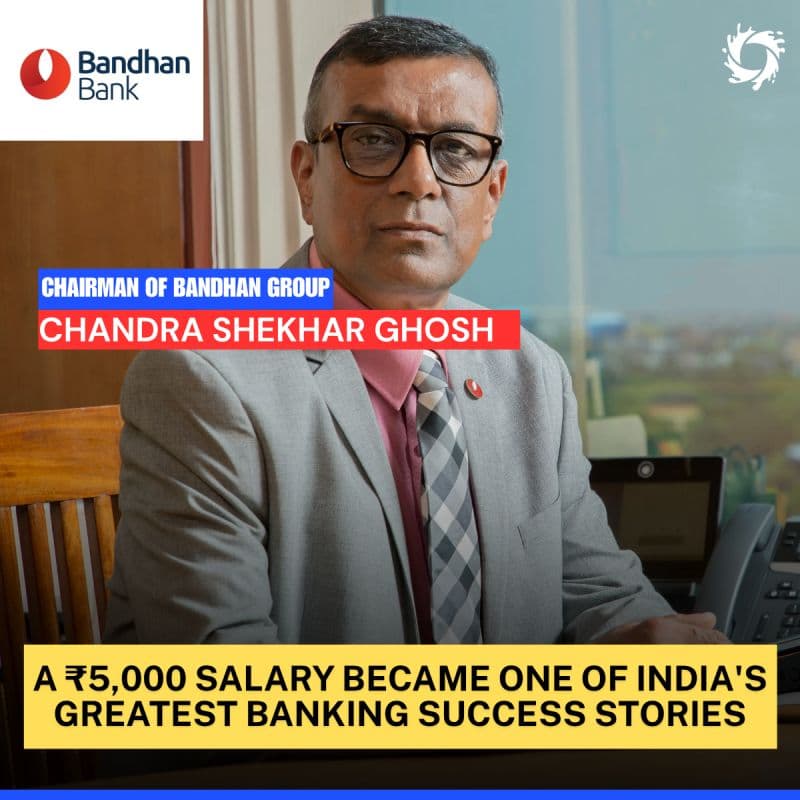
In 2001, Chandra Shekhar Ghosh walked away from salaried employment to start Bandhan as a microfinance initiative targeting rural women locked out of formal banking. At the time, mainstream finance viewed these communities as too risky. Ghosh's wager was different: trust could work as a business model.
The bet paid. Over the next 14 years, Bandhan grew into India's largest microfinance institution. In 2015, the Reserve Bank of India granted it a Universal Banking Licence—a first for any MFI in the country. That licence unlocked a shift from pure microfinance into full-service banking.
-800x450.jpg&w=3840&q=75)
-800x450.jpg&w=3840&q=75)
-800x450.jpg&w=3840&q=75)
-800x450.jpg&w=3840&q=75)
-800x450.jpg&w=3840&q=75)
-800x450.jpg&w=3840&q=75)
-800x450.jpg&w=3840&q=75)
-800x450.jpg&w=3840&q=75)