FinsamudraFinsamudra
Banking & NBFCsDaily brief

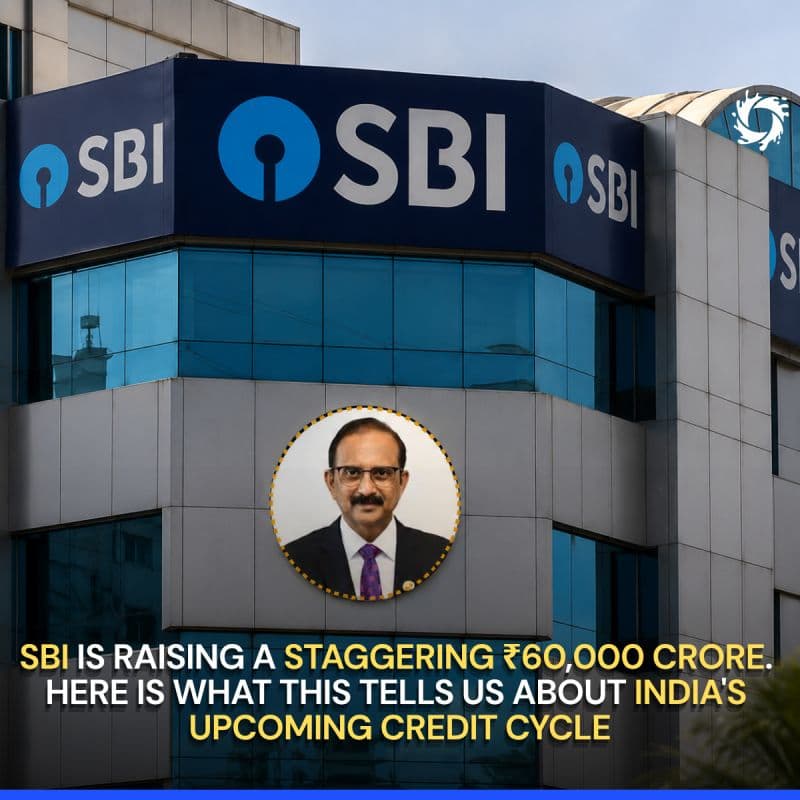
SBI raises ₹60,000 crore in debt to fuel FY27 credit cycle

State Bank of India's central board approved a mega fundraise entirely through bonds, signalling confidence in sustained corporate credit and infrastructure demand ahead.

F

Finsamudra Desk

19 Jun 2026, 12:15 pm IST · 1 min read

₹60,000 croreFY27 fundraise size100% debt (no equity dilution)Fundraise method
➤The State Bank of India (SBI) just made a massive move that serves
Image: Finsamudra LinkedIn archive

State Bank of India's central board has approved a ₹60,000 crore fundraise for FY27, entirely through debt instruments rather than equity dilution. The capital will be raised via long-term infrastructure bonds and Basel III-compliant AT1 and Tier 2 bonds.

A fundraise of this scale signals SBI's expectation of massive, sustained corporate credit demand and infrastructure borrowing throughout FY27. Banks do not lock in ₹60,000 crore unless they have immediate, high-yield deployment avenues ready.

By raising capital purely through bond markets instead of new equity issuance, SBI protects shareholder valuation while meeting RBI's strict capital adequacy requirements. This approach sidesteps equity dilution while maintaining regulatory compliance.

The primary corporate debt issuance will deepen liquidity in India's bond market and attract significant foreign institutional interest. Large-scale fundraises by systemically important banks typically reshape market depth and investor participation.

SBI's capital-locking strategy positions it as the primary engine for funding India's upcoming capex cycle. When the largest bank by assets moves decisively, market participants adjust expectations for credit availability and pricing across the economy.

Sources

Join the conversation on LinkedIn →

Free daily briefing

The day's money story, before the market opens

The same daily intelligence 30,000+ CXOs, DSAs and finance professionals follow on LinkedIn — with the Finsamudra take on what it means for lending.