
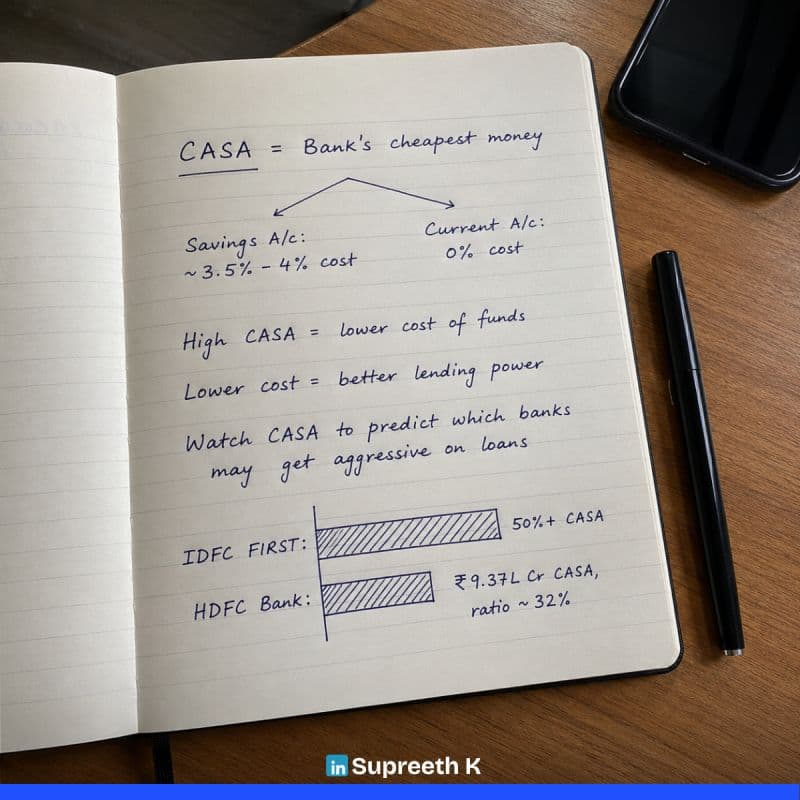
CASA — Current Account plus Savings Account — is the cheapest source of funds available to Indian banks, cheaper than any external funding route.
A savings account typically costs a bank around 3.5% to 4%. A current account costs almost nothing. Banks with a higher share of these deposits carry a lower overall cost of funds.
That lower cost of funds gives a bank room to offer sharper loan pricing, absorb interest rate pressure, and still protect its net interest margins (NIMs).

-800x450.jpg&w=3840&q=75)

-800x450.jpg&w=3840&q=75)
-800x450.jpg&w=3840&q=75)
-800x450.jpg&w=3840&q=75)
-800x450.jpg&w=3840&q=75)
-800x450.jpg&w=3840&q=75)