
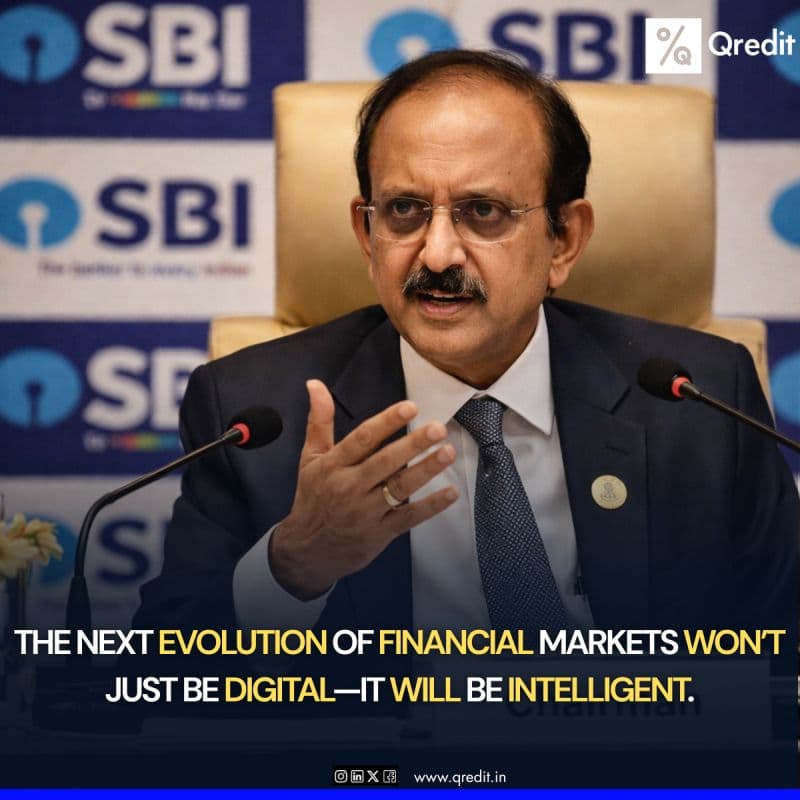
C. S. Setty, Chairman of State Bank of India, has highlighted artificial intelligence as a transformative force in financial market infrastructure. Speaking on the technology's role, Setty pointed to three concrete applications: enhanced risk management, improved operational efficiency, and real-time market surveillance.
The SBI Chairman emphasised that large-scale data analysis powered by AI can move financial systems toward more dynamic approaches to assessing exposures and managing risk. Rather than static, backward-looking models, AI enables forward-looking frameworks that anticipate problems before they materialise.
This represents a fundamental shift in how financial institutions approach risk. Instead of reacting to crises after they emerge, banks and lenders can now deploy predictive, intelligence-driven frameworks to address exposures proactively. For a system handling India's expanding credit distribution, this capability is material.
-800x450.jpg&w=3840&q=75)
-800x450.jpg&w=3840&q=75)
-800x450.jpg&w=3840&q=75)
-800x450.jpg&w=3840&q=75)
-800x450.jpg&w=3840&q=75)
-800x450.jpg&w=3840&q=75)
-800x450.jpg&w=3840&q=75)
-800x450.jpg&w=3840&q=75)