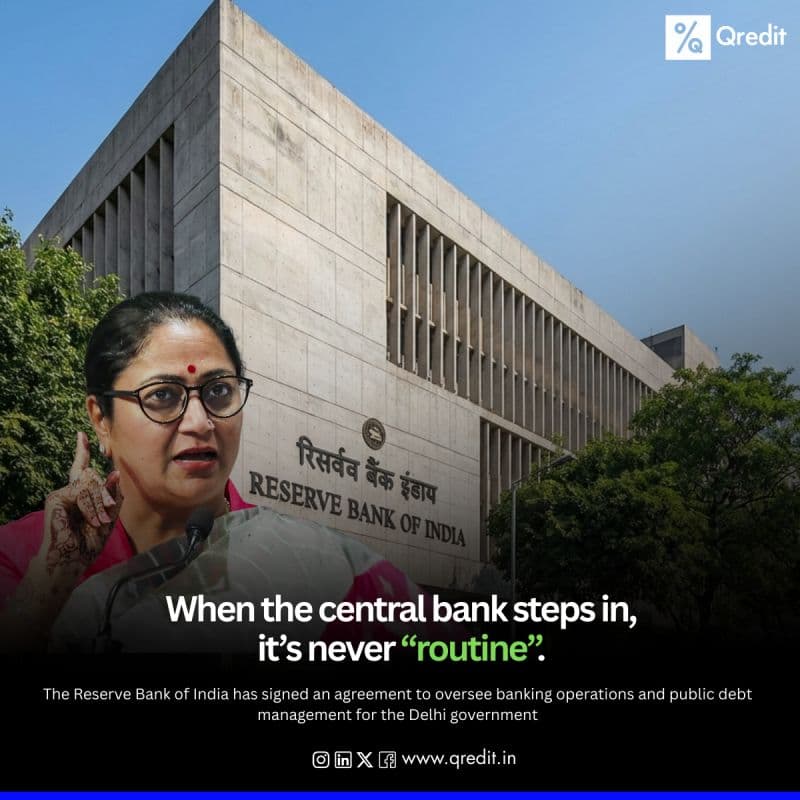
The Reserve Bank of India has entered into an agreement to oversee banking operations and public debt management for the Delhi government. This marks a notable deepening of RBI's institutional involvement in state-level financial administration.
The move reflects three core pressures on India's public finances: rising complexity of state debt portfolios, the need for coordinated fiscal management across centre and states, and a push to strengthen credibility in state financial disclosures.
-800x450.jpg&w=3840&q=75)
-800x450.jpg&w=3840&q=75)
-800x450.jpg&w=3840&q=75)
-800x450.jpg&w=3840&q=75)
-1-800x450.jpg&w=3840&q=75)
-800x450.jpg&w=3840&q=75)
-800x450.jpg&w=3840&q=75)