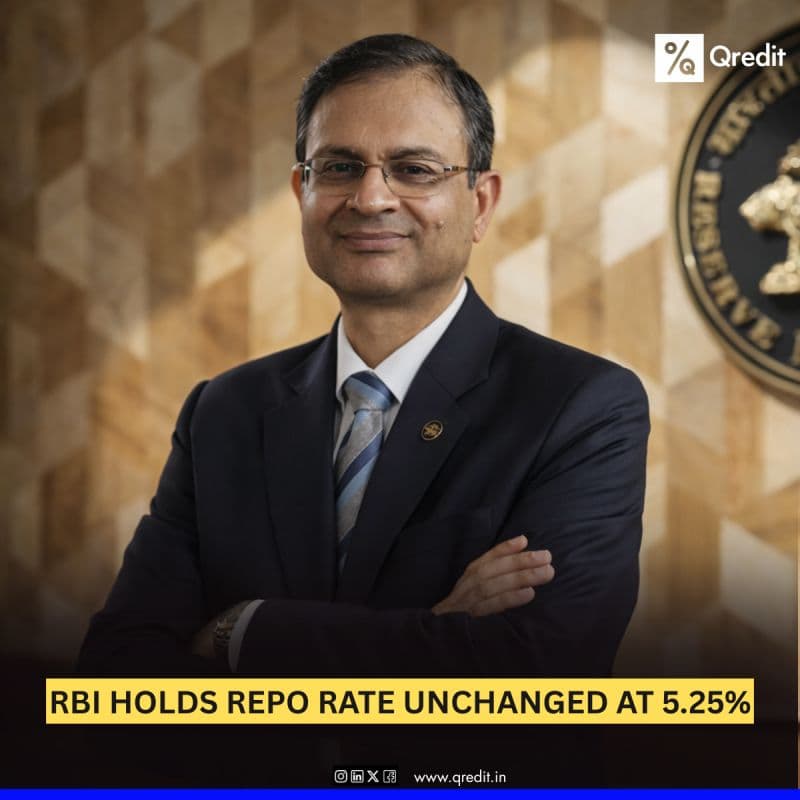
The Reserve Bank of India's April 2026 monetary policy decision delivered no rate change: the repo rate remains at 5.25%. Governor Sanjay Malhotra held steady for the second consecutive meeting, even as external pressures mount across multiple fronts.
Crude oil has climbed above $100 per barrel due to West Asia conflict, intensifying imported inflation concerns. Simultaneously, the rupee weakened to a record low of ₹93.94 against the US dollar, and foreign portfolio investors have exited ₹1.5 trillion from Indian markets during 2026—a significant capital outflow.
The RBI faces a genuine bind. A rate cut would risk widening the imported inflation problem at an already vulnerable moment. A hike, meanwhile, would choke growth momentum precisely when Indian banks are reporting robust 13–14% loan growth—the lifeblood of credit distribution.
-800x450.jpg&w=3840&q=75)
-800x450.jpg&w=3840&q=75)
-800x450.jpg&w=3840&q=75)
-800x450.jpg&w=3840&q=75)
-1-800x450.jpg&w=3840&q=75)
-800x450.jpg&w=3840&q=75)
-800x450.jpg&w=3840&q=75)