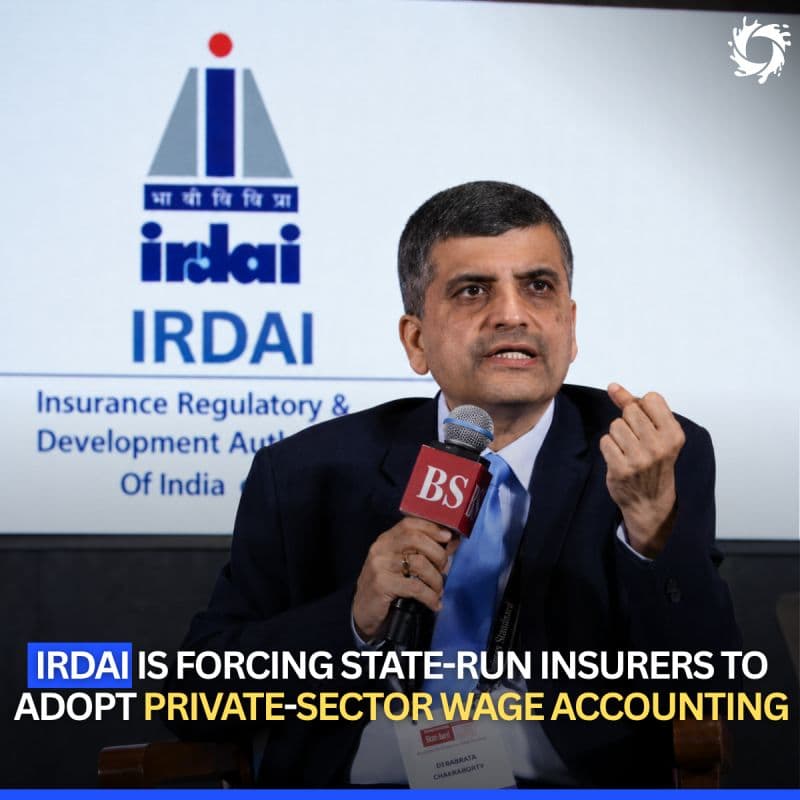
State-run general insurers in India have long operated without accounting for future wage obligations annually. The Insurance Regulatory and Development Authority of India has now closed this gap by mandating that public sector general insurers calculate and create annual provisions for expected wage revisions.
The shift addresses a structural problem in how public sector wage negotiations work. Wage deals take years to negotiate and are typically backdated retrospectively upon approval. The recent wage hike approved in early 2026, for example, was backdated to 2022 and resulted in an ₹8,170 crore bill that hit insurer balance sheets all at once.
Previously, state-run insurers absorbed these entire back-pay bills as sudden, lump-sum shocks when deals were signed. The impact was severe: quarterly profits evaporated, solvency ratios collapsed, and insurers triggered emergency capital requirements that fell to taxpayers.
-800x450.jpg&w=3840&q=75)
-800x450.jpg&w=3840&q=75)
-800x450.jpg&w=3840&q=75)
-800x450.jpg&w=3840&q=75)
-1-800x450.jpg&w=3840&q=75)
-800x450.jpg&w=3840&q=75)
-800x450.jpg&w=3840&q=75)