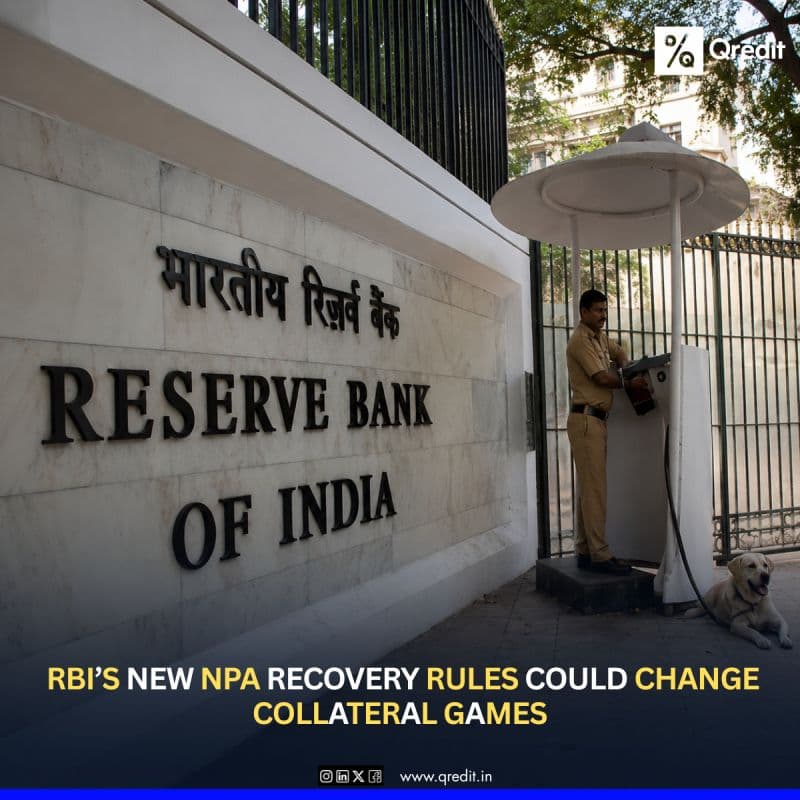
The RBI has proposed a framework governing how banks and NBFCs can acquire and dispose of immovable assets during loan recovery. The rules are designed to address a persistent problem: when collateral enters the recovery process, it often becomes a negotiation between lender and borrower on valuation, pricing, and buyer identity.
Under the new rules, banks and NBFCs may acquire immovable collateral only in exceptional recovery cases—not as routine practice. Once acquired, assets must generally be disposed of within seven years, creating a clear timeline for exit.
A critical restriction bars sale of recovered assets back to the original borrower or related parties. This measure directly reduces moral hazard: borrowers cannot quietly reclaim collateral at favourable terms, nor can related entities act as conduits to return assets to the borrower ecosystem.
-800x450.jpg&w=3840&q=75)
-800x450.jpg&w=3840&q=75)
-800x450.jpg&w=3840&q=75)
-800x450.jpg&w=3840&q=75)
-1-800x450.jpg&w=3840&q=75)
-800x450.jpg&w=3840&q=75)
-800x450.jpg&w=3840&q=75)