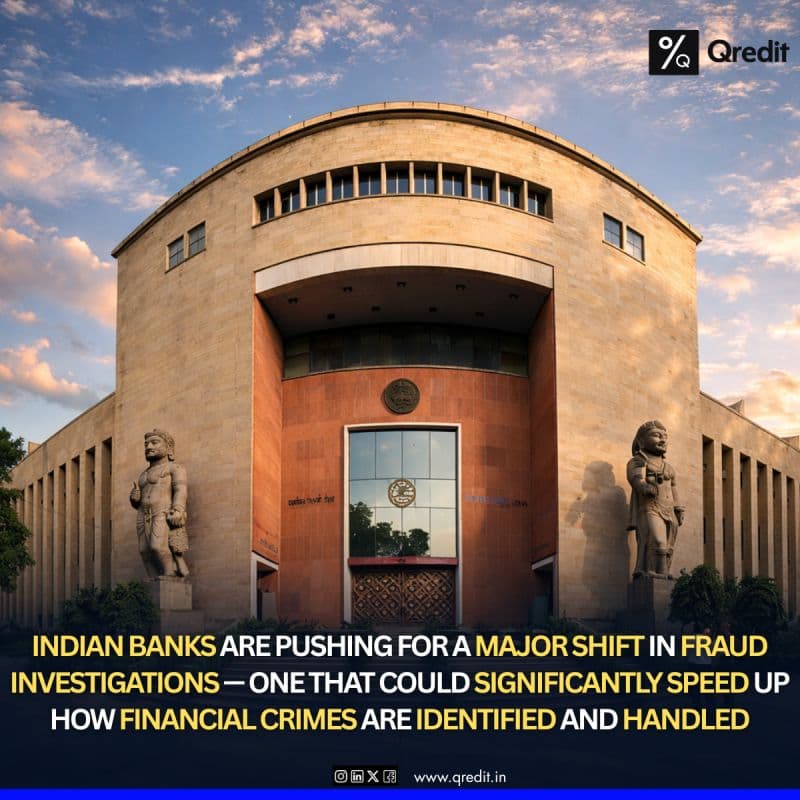
Banks in India currently rely heavily on external investigative agencies—the CBI and police—to conclusively classify accounts as fraudulent before taking action. This dependency creates bottlenecks: investigations drag on, findings vary across agencies, and recovery timelines stretch.
Leading banks have now petitioned the RBI to allow parallel internal investigations. The proposal would let lenders assess suspected fraud cases independently while law enforcement conducts its own probes, both running simultaneously.
The move targets three core problems: slow fraud classification that delays risk provisioning, inconsistencies when multiple agencies investigate the same case, and weak coordination in multi-bank lending scenarios where fraud may span several lenders.
-800x450.jpg&w=3840&q=75)
-800x450.jpg&w=3840&q=75)
-800x450.jpg&w=3840&q=75)
-800x450.jpg&w=3840&q=75)
-1-800x450.jpg&w=3840&q=75)
-800x450.jpg&w=3840&q=75)
-800x450.jpg&w=3840&q=75)