
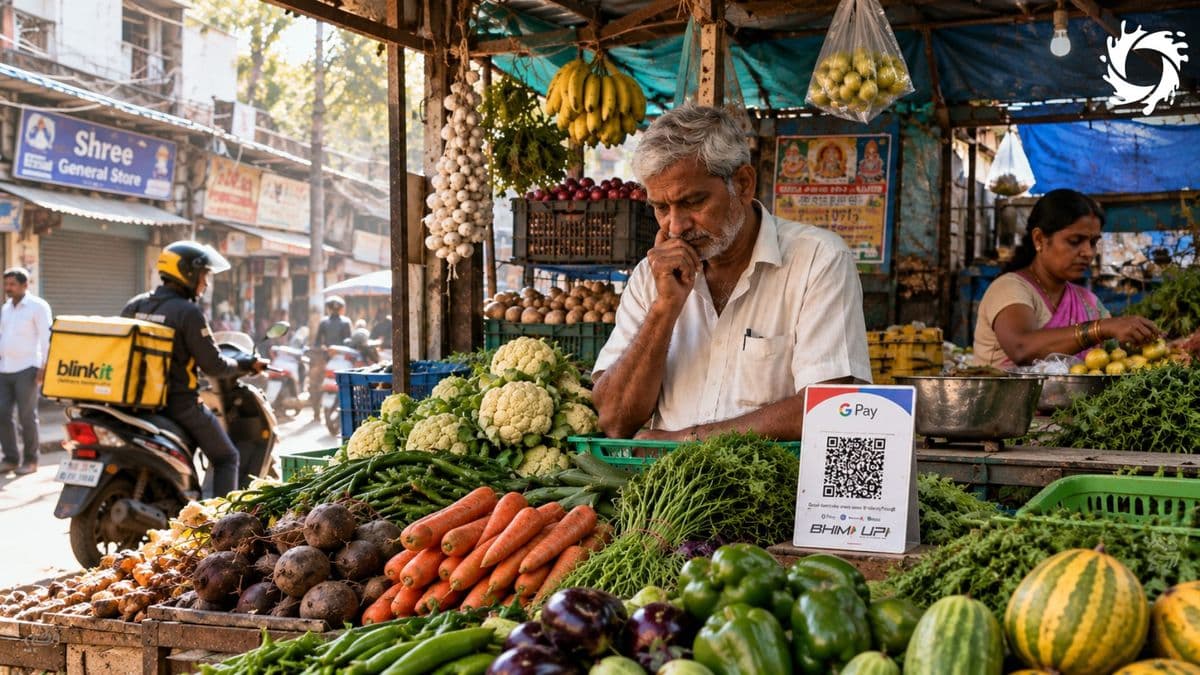
A recent gazette notification by the Ministry of Finance has reignited viral rumors across messaging platforms and social networks, with claims suggesting that peer-to-peer and merchant UPI payments over ₹2,000 will now incur a surcharge.
The reality is starkly different: Consumers will not pay a single paisa extra on UPI transactions of any ticket size.
The notification issued under Section 10A of the Payment and Settlement Systems (PSS) Act, 2007, formalizes a legal "zero-charge shield" for transactions up to ₹2,000, while leaving Person-to-Person (P2P) transfers completely exempt. For high-value Person-to-Merchant (P2M) purchases, any eventual processing charge will be borne exclusively by merchants, not end users.
Here is a comprehensive breakdown of the statutory notification, what changes on the ground, and how it impacts consumers, merchants, and fintech platforms.
1. What Did the Finance Ministry Actually Notify?
Following statutory amendments passed by Parliament in August 2026, the Ministry of Finance issued Notification S.O. 5067(E) on September 14, 2026. Under the amended Section 10A of the PSS Act, the government specified two digital payment modes where banks and payment aggregators are strictly prohibited from levying any direct or indirect charges:
- Unified Payments Interface (UPI) transactions up to ₹2,000
- RuPay-powered debit cards
The ₹2,000 number is not a spending ceiling or transfer cap. It is an explicit legislative floor designed to ensure small retail payments (which constitute over 75% of total UPI volumes) remain permanently immune from any future merchant discount rates or bank fees.
2. Person-to-Person (P2P) Transfers: Completely Free Across All Ticket Sizes
One of the most widespread misconceptions is that sending money to family or settling shared bills above ₹2,000 will attract fees.
- Transferring ₹2,500 to a friend: Zero fee.
- Sending ₹5,000 to family: Zero fee.
- Paying ₹20,000 or ₹50,000 for house rent via UPI: Zero fee.
The government and the National Payments Corporation of India (NPCI) have reiterated that the P2P transfer rail remains completely cost-free for all citizens.
3. Person-to-Merchant (P2M): Does Paying a Merchant Above ₹2,000 Cost More?
When you scan a QR code at a grocery supermarket, electronics store, or restaurant:
- Customer Deductions: If your grocery bill is ₹5,000, your bank account will be debited exactly ₹5,000. Under no regulatory circumstance will an end consumer be billed ₹5,020.
- Current Status: As of today, there is no new charge active on merchant transactions either.
- Future Framework: By shielding transactions up to ₹2,000 under Section 10A, the government has created enabling room for regulators (RBI, NPCI, and the UPI Steering Committee) to decide whether a Merchant Discount Rate (MDR) should be reintroduced for large commercial merchants (>₹2,000) to support backend server infrastructure and cybersecurity investments.
4. What Is the Proposed 0.4% MDR and How Would It Work?
Discussions reported by Reuters suggest that payment industry participants and regulators are considering an indicative 0.4% MDR on commercial payments above ₹2,000, tailored specifically for large corporate and retail enterprises.
If such a framework is eventually formalized, the processing cost would be deducted from the merchant's net settlement:
Transaction TypePayment AmountAmount Paid by CustomerCustomer FeeIllustrative Merchant Settlement (At 0.4% MDR if enacted)
P2P Transfer
₹2,500
-800x450.jpg&w=3840&q=75)
-800x450.jpg&w=3840&q=75)
-800x450.jpg&w=3840&q=75)
-800x450.jpg&w=3840&q=75)
-800x450.jpg&w=3840&q=75)

-800x450.jpg&w=3840&q=75)