
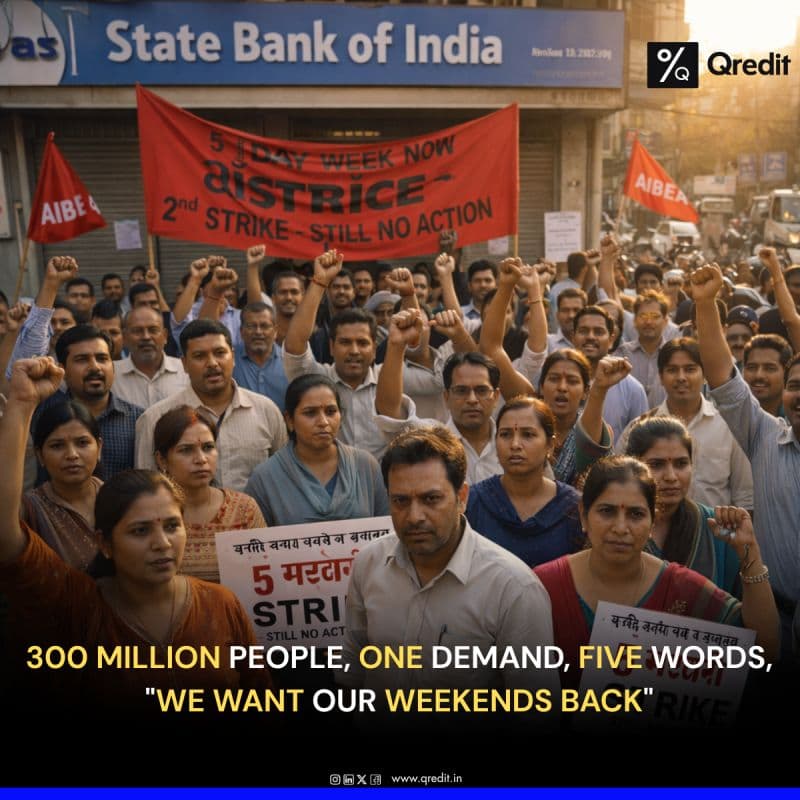
India faces its second significant bank strike on February 12, 2026, with 300 million workers expected to participate. The demand centres not on wages but on work schedules: a 5-day work week for bank employees who currently work six days.
The irony is sharp. RBI employees, LIC staff, and stock exchange workers already operate on 5-day weeks. Bank employees—who manage the nation's financial infrastructure—remain on six-day schedules despite regulatory peers enjoying shorter weeks.
-800x450.jpg&w=3840&q=75)
-800x450.jpg&w=3840&q=75)
-800x450.jpg&w=3840&q=75)
-800x450.jpg&w=3840&q=75)
-800x450.jpg&w=3840&q=75)
-800x450.jpg&w=3840&q=75)
-800x450.jpg&w=3840&q=75)
-800x450.jpg&w=3840&q=75)