
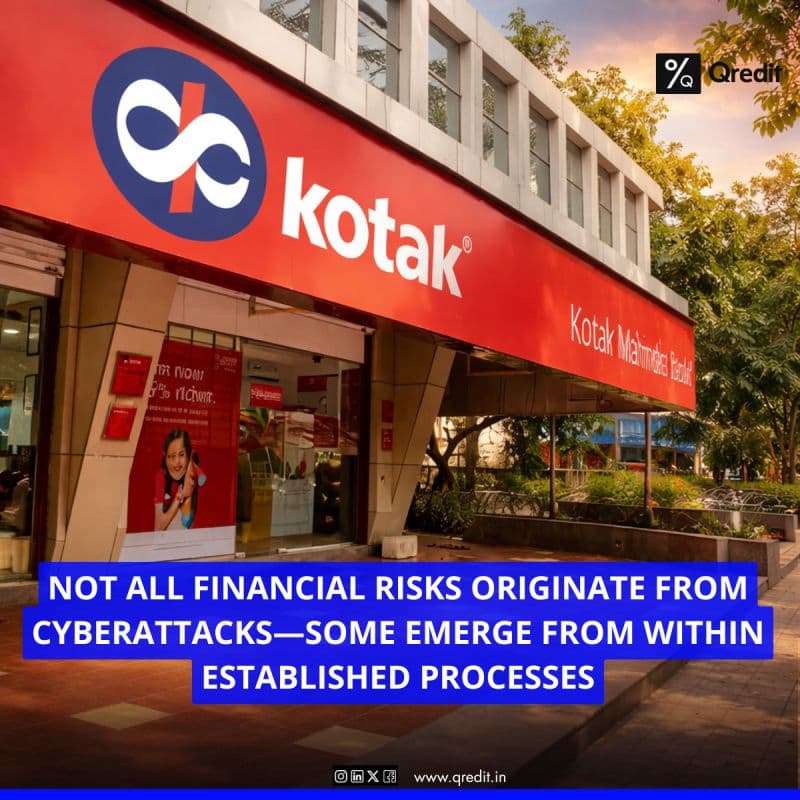
A relationship manager at Kotak Mahindra Bank has been accused of issuing false fixed deposit reports valued at over ₹150 crore to a municipal body. The case marks a shift in how financial institutions should think about fraud risk: there was no indication of a cyber breach or external system compromise.
The alleged misrepresentation appears to have occurred within internal processes, suggesting the vulnerability lay not in technology but in how procedures were executed or enforced. This raises three critical questions for bank governance: Are verification mechanisms sufficiently independent? Is there over-reliance on relationship-driven assurances? Are internal checks proactive rather than reactive?
Financial systems typically anchor trust in documentation. When that documentation is called into question—as in this case—confidence can erode, particularly when institutional clients are involved. A municipal body's reliance on false FD reports creates both reputational and operational fallout.
-800x450.jpg&w=3840&q=75)
-800x450.jpg&w=3840&q=75)
-800x450.jpg&w=3840&q=75)
-800x450.jpg&w=3840&q=75)
-800x450.jpg&w=3840&q=75)
-800x450.jpg&w=3840&q=75)
-800x450.jpg&w=3840&q=75)
-800x450.jpg&w=3840&q=75)