
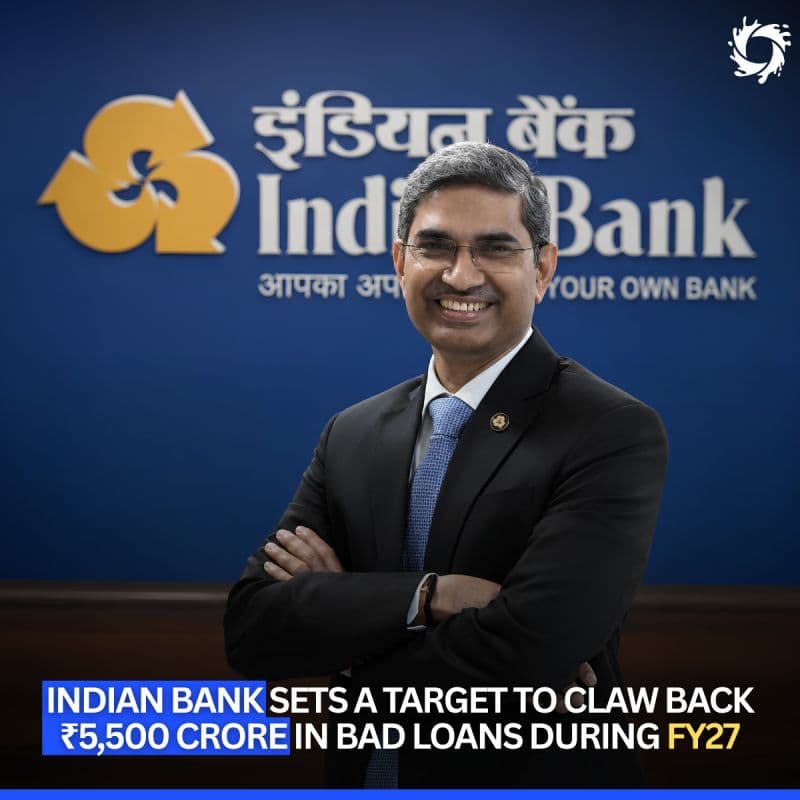
Indian Bank has set an ambitious recovery target of ₹4,500 crore to ₹5,500 crore from non-performing assets (NPAs) in FY27. Under MD & CEO Binod Kumar, the bank is executing a systematic approach to claw back capital from defaults that have accumulated on its books.
The scale of early progress is striking. In Q1 FY27 alone, the bank recovered ₹1,885 crore—representing over 34% of the maximum annual target in just 90 days. This pace suggests Indian Bank is on track to exceed its FY27 goal.
The bank is deploying multiple recovery levers: NCLT resolutions, one-time settlements with defaulters, and asset sales to recovery companies (ARCs). Each method extracts capital tied up in bad loans and channels it back to operations.
-800x450.jpg&w=3840&q=75)
-800x450.jpg&w=3840&q=75)
-800x450.jpg&w=3840&q=75)
-800x450.jpg&w=3840&q=75)
-800x450.jpg&w=3840&q=75)
-800x450.jpg&w=3840&q=75)
-800x450.jpg&w=3840&q=75)
-800x450.jpg&w=3840&q=75)