
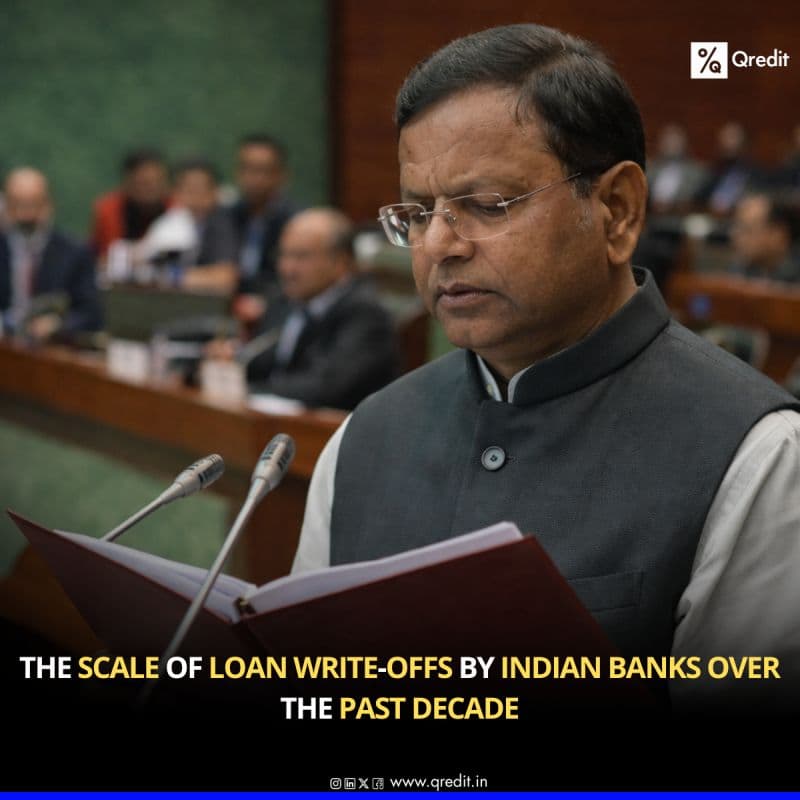
Scheduled commercial banks in India have written off approximately ₹9.75 lakh crore between FY15 and FY25, according to data shared in Parliament by Pankaj Chaudhary. A write-off is an accounting adjustment that allows banks to clean up their balance sheets by removing non-performing assets (NPAs) from active lending portfolios.
Critically, write-offs do not mean the money is lost forever. These accounts remain subject to recovery and legal proceedings even after being removed from the books. Banks continue pursuing debt collection and court cases against defaulters, with recoveries feeding back into income over time.
The scale of write-offs points to systemic weaknesses in credit appraisal and risk management that accumulated over the decade. However, data shows write-offs have moderated in recent years, suggesting the banking system has strengthened its ability to recognize and resolve stress faster than before.
-800x450.jpg&w=3840&q=75)
-800x450.jpg&w=3840&q=75)
-800x450.jpg&w=3840&q=75)
-800x450.jpg&w=3840&q=75)
-800x450.jpg&w=3840&q=75)
-800x450.jpg&w=3840&q=75)
-800x450.jpg&w=3840&q=75)
-800x450.jpg&w=3840&q=75)